
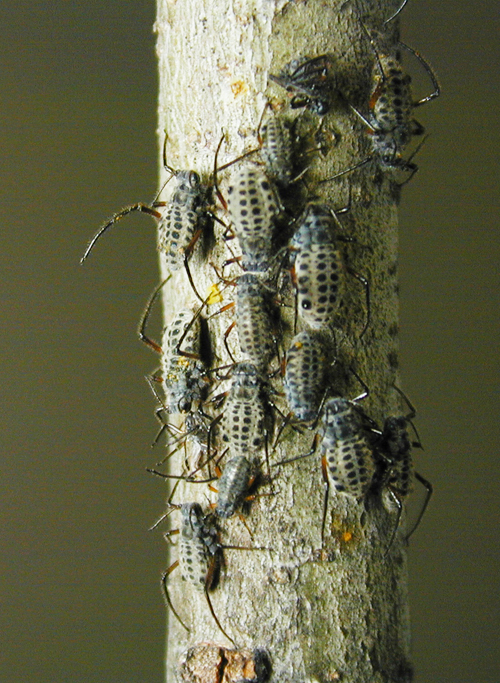
The large size, gray color and rows of black docks distinguish giant bark aphid.
The giant bark aphid, Longistigma caryae, is the largest aphid in North America. Despite its large size, I rarely receive reports of this insect because in most years its numbers are so low. This year, however, Extension specialists have already had multiple reports of the aphid. One of the last times I reported on an outbreak of giant bark aphids was 2002, coincidentally (or not), also during a spring that followed a mild winter.
Giant bark aphids are about 6 mm-long (1/4 inch), brownish gray with black spots. Their long legs, which makes them appear even larger, give them a spider-like appearance. Males and some females are winged but egg laying females are wingless. When alive they are often partially covered with a bluish white, waxy secretion. The gray body and rows of black spots along its back helps giant bark aphids blend in well on bark.
Unusually, for an aphid, damage to trees from feeding can be severe. It is not unusual for infestations to cause branch and limb die-back. A tree farm in east Texas this spring reported loss of a number of redbud trees, and Shumard red oaks. In addition, wax myrtle and cedar elm were severely damaged. Pecan, hickory, willow and live oak trees have also been reported as hosts for these aphids.
Where heavy infestations occur, the aphids can literally blanket twigs and branches. When this occurs it is not uncommon to find sticky pools of plant sap under trees. If you find these sap pools or clusters of aphids on your tree, I suggest taking prompt action to remove or kill the infestation.
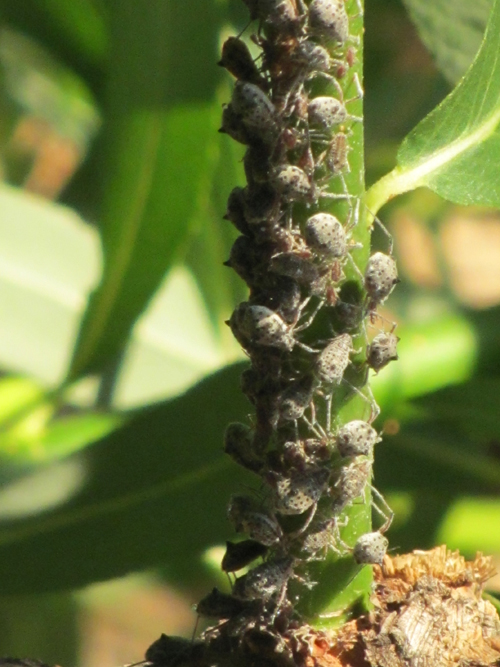
Another type of giant bark aphid, Tuberolachnus salignus is specific to willow, and is probably shown in this picture taken on an "aussie" willow in Lewisville, TX by Lee McClurg. T. salignus has a bump, or large "conical tubercle" on its back.
On smaller trees, aphids may be controlled with a stiff stream of water from a hose. The safest course for larger trees, may be to spot-treat infested branches and trunks with a spray of imidacloprid, malathion, or acephate (Orthene). Bifenthrin has also been reported to be an effective treatment, suggesting that pyrethroid sprays labeled for trees may be a good choice. Insecticidal soap or horticultural oil sprays are the low-impact choices, and may also be effective, although these sprays will require direct wetting of the aphid to get good control.
Consider sharing your experience with these aphids using the comment box below. If you have an infestation to report, include the name of the tree or shrub affected, along with your city and county. Thanks.