-
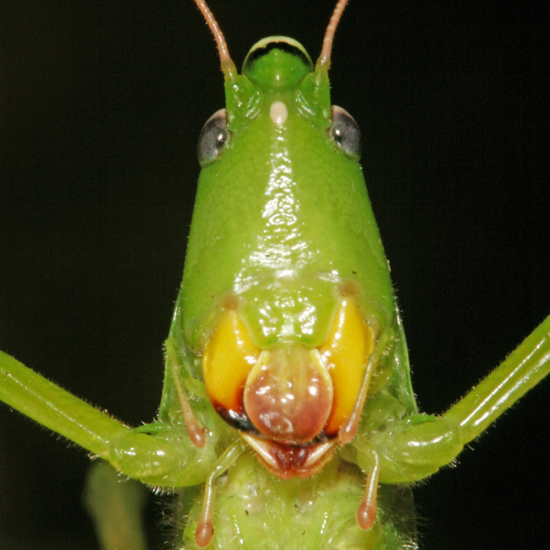
- A katydid with her chewing mouthparts smiles for the camera
-
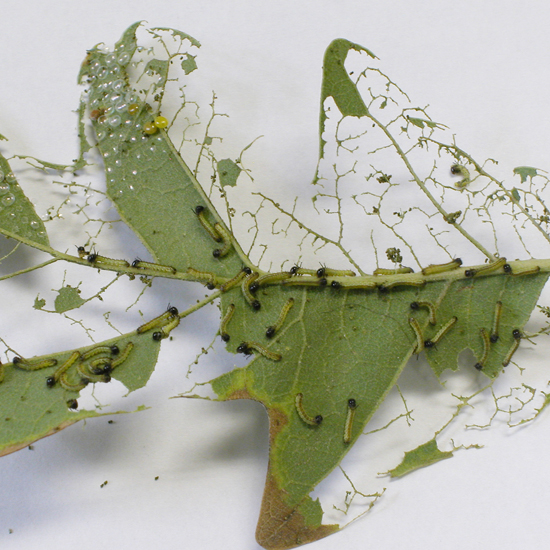
- Oakleaf caterpillars
-
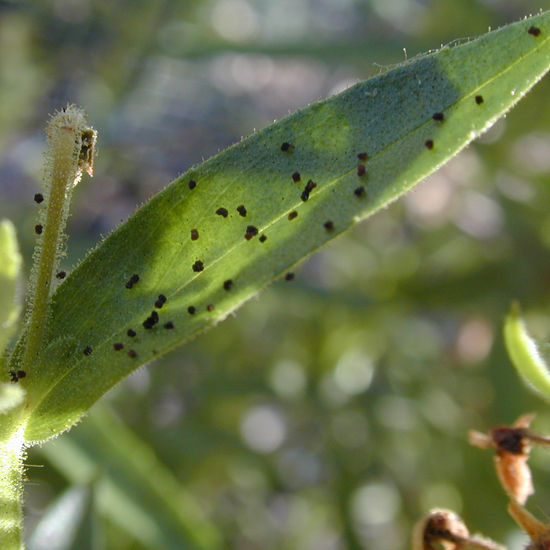
- Droppings caught on leaves are often the first sign of chewing insect damage
Chewing insects
Perhaps the most widely recognized type of insect damage to plants is chewing insect damage. Chewing damage is caused by insects with mouth parts consisting of two opposing mandibles, or jaws. Insects with chewing mouth parts are responsible for ragged leaves, foliage consumption, and mining in leaves, stems and trunks of plants.
Frequently Asked Questions About Chewing Insects
- What are mouth parts on insects like, and how can I see them?
- What does chewing insect damage look like?
Publications on Chewing Insects
- Grasshopper control tips for Texas (Ent-1005) Periodically grasshoppers can descend on backyards, gardens and fruit trees. This publication offers control suggestions as well as a list of plants grasshoppers don’t seem to like very much.
- Oak leaf roller and springtime defoliation of oak trees (E-206) Several caterpillars attack oak trees. This publication addresses those caterpillars that appear in outbreaks.
- Tent caterpillars in trees (e-218) Tent caterpillars hide during the day in silken “nests” in the crotches of trees. Find out what they do and how to control them when they chew your trees.
- Bagworms (E-480) Which caterpillar carries a home of silk and leaves around on it’s back? If you guessed bagworm you’re right!
- Fall webworm (E-223) Which caterpillar covers the tips of branches with webbing? The fall webworm–and it’s not just busy in the fall.
- Walnut caterpillar (E-535) A common caterpillar of pecan, walnut and hickory, the fuzzy, dark-striped walnut caterpillar hates to eat alone.
- Elm leaf beetles (L-1812) One of the few tree-chewing insects that’s not a caterpillar
- Pillbugs (ENT-1006) Not an insect, but a chewing crustacean that can damage some flowers and garden plants. Also called roly-polies.
- What’s a hornworm caterpillar? (ENT-6008)
- Wood boring insects of trees and shrubs (B-5086). Holes in the trunks or limbs of your trees can lead to trouble. This fact sheet shows how borers can be important pests of trees, and what you can do about them.
